Choosing The Right Safety Glasses: Concerns And Considerations
Choosing The Right Safety Glasses: Concerns And Considerations – Anyone who’s ever worked in construction, done any home repairs, or played on a sports team has had to wear safety glasses at one point or another. Yet there are many types of safety glasses out there and it can be confusing to figure out which eyewear is the best for your needs– the answer will depend on how you’ll be doing your work and what tasks you might need protection from. In this post, we’ll cover the different materials and types of safety eyewear, so that you’ll know how to make a good decision when buying!
Materials
When it comes to safety glasses, the material of the lens is just as important as the style. There are three main types of lens materials used in safety glasses: polycarbonate, Trivex, and glass.
Polycarbonate is the most common type of lens material used in safety glasses. It is lightweight and resistant to impact and breakage. However, polycarbonate lenses can scratch easily and are not suitable for use in extreme temperatures.
Trivex is a newer lens material that is similar to polycarbonate in terms of weight and impact resistance. However, Trivex lenses are less likely to scratch and can be used in extreme temperatures.
Glass lenses are the heaviest and most durable type of lens material. They are resistant to scratches and impact, but they are more likely to break than polycarbonate or Trivex lenses. Glass lenses are also not suitable for use in extreme temperatures.
When choosing safety glasses, it is important to consider the type of work you will be doing and the environment you will be working in. If you will be working in a high-risk environment or doing work that could potentially damage your glasses, it is important to choose a stronger material.

Frames
There are a few things to consider when choosing the right safety glasses. Frames are one of the most important factors to consider. The frame should be made of a sturdy material that will not break easily. It should also be comfortable to wear for long periods of time.
Another important factor to consider is the lens. The lens should be made of a material that will not shatter easily. It should also offer clear vision and be free of scratches.
Finally, you will need to decide what style of safety glasses you want. There are many different styles available, so you should take some time to try on different pairs to find the ones that fit you best.
Clear Lenses
There are many different types of safety glasses available on the market today. When it comes to choosing the right pair for your needs, one of the first things you need to consider is the lens type. Clear lenses are a popular option for many people, as they allow you to see clearly while still providing protection from potential hazards.
If you work in an environment where there is a lot of dust or other debris in the air, clear lenses are a good choice as they will help to keep your eyes free from irritation. They are also a good option if you need to wear your glasses for extended periods of time, as they will not cause eye fatigue as some other lens types can.
However, clear lenses do have some drawbacks. One is that they do not provide as much protection from UV rays as other lens types do. If you work outdoors or in any environment where you are exposed to direct sunlight, you may want to consider another type of lens. Additionally, clear lenses can also be more susceptible to scratching or damage than other types, so you need to take care when cleaning them and storing them when not in use.
Fog Resistant
When working in hazardous environments, it is important to have a clear line of sight. Unfortunately, sometimes fog or condensation can form on safety glasses, obscuring your vision. In these cases, it is important to choose a pair of glasses that are fog-resistant.
There are a few different ways that manufacturers achieve fog resistance. One common method is to apply a layer of anti-fog coating to the lenses. This coating helps to prevent water droplets from adhering to the glass and causing fog. Another option is to choose safety glasses with ventilation holes or vents. These holes allow air to circulate around the lenses, helping to prevent fogging.
Ultimately, choosing the right fog-resistant safety glasses will depend on your individual needs and preferences. Be sure to try out a few different pairs to see which ones work best for you.
Polarized Lenses
Polarized Lenses are one of the most popular types of safety glasses lens on the market. They are designed to reduce glare and improve visibility in outdoor conditions. However, there are some things to consider before purchasing polarized lenses. Here are a few concerns and considerations:
1. Glare Reduction: Polarized lenses can be very effective at reducing glare from the sun and other light sources. However, they can also make it difficult to see objects that are behind reflective surfaces, like water or glass. If you work in an environment where you need to see objects behind reflective surfaces, polarized lenses may not be the best option for you.
2. Visibility: Polarized lenses can improve visibility in outdoor conditions, but they can also make it difficult to see in low-light conditions. If you work in an environment where you need to be able to see in low-light conditions, polarized lenses may not be the best option for you.
3. Cost: Polarized lenses can be more expensive than other types of safety glasses lenses. If cost is a concern, you may want to consider another type of lens.
4. Availability: Not all safety glasses manufacturers offer polarized lenses.
Safety Standards/Certifications
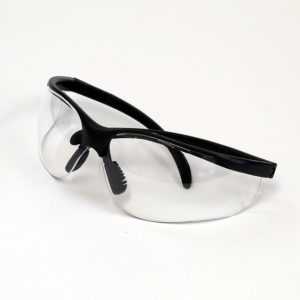
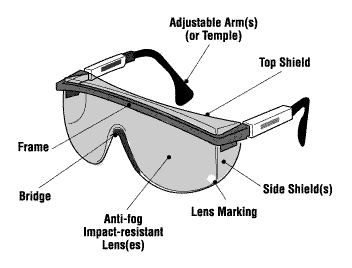
How do I recognize safety eyewear?
Lenses: CSA-certified eye and face protectors must meet the criteria for impact resistance as outlined in the standard. Only devices made of approved materials are permitted.
Markings: The manufacturer or supplier certification mark must be present on all approved safety lenses, frames (front and temple), removable side shields, and other parts of the glasses, goggles, or helmets.
Frames: Safety frames are stronger than street-wear frames and are often heat resistant. They are also designed to prevent lenses from being pushed into the eyes.
What are the pros and cons of the different lenses?
| Comparison of Lens Materials | |
|---|---|
| Material | Characteristics |
| Hi-Vex |
|
| Polycarbonate |
|
| Plastic (CR39) |
|
| Trivex |
|
| Glass |
|
From: CSA Standard Z94.3.1-16 Guideline for selection, use, and care of eye and face protectors, 2016
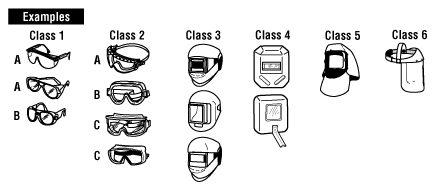
| Nature of hazard | Hazardous Activities involving but not limited to | Recommended protectors |
|---|---|---|
| Flying Objects | Chipping, scaling, stonework, drilling, grinding, buffing, polishing, hammer mills, crushing, heavy sawing, planing, wire and strip handling, hammering, unpacking, nailing, punch press, lathework | Class 1A – Spectacles Class 2A, 2B – Goggles Class 5A, 5B – Hoods Class 6A, 6D – Face shields |
| Flying particles, dust, wind, etc. | Woodworking, sanding, light metal working and machining, exposure to dust and wind, resistance welding (no radiation exposure), sand, cement, aggregate handling, painting, concrete work, plastering, material batching and mixing | Class 1A – Spectacles Class 2A, 2B – Goggles Class 5A, 5B – Hoods Class 6A, 6D – Face shields |
| Heat, sparks, and splash from molten materials | Babbiting, casting, pouring, molten metal, brazing, soldering, spot welding, stud welding, hot dipping operations | Class 1B – Spectacles Class 2C – Goggles Class 5C, 5D – Hoods Class 6B, 6C, 6D – Face Shields |
| Acid splash, chemical burns | Acid and alkali handling, degreasing, pickling and plating operations, glass breakage, chemical spray, liquid bitumen handling | Class 2B – Goggles Class 5B – Hoods Class 6A – Face Shields |
| Abrasive blasting materials | Sand blasting, shot blasting, shotcreting | Class 2B – Goggles Class 5B – Non-Rigid Hoods Class 6A – Face Shields |
| Glare, stray light (where slight reduction of visible radiation is required) | Reflection, bright sun and lights, reflected welding flash, photographic copying | Class 1A – Spectacles Class 2A, 2B – Goggles Class 5A, 5B – Hoods Class 6A – Face Shields |
| Injurious optical radiation (where moderate reduction of optical radiation is required) | Torch cutting, welding, brazing, furnace work, metal pouring, spot welding, photographic copying | Class 1B – Spectacles Class 2C – Goggles Class 5C – Hoods Class 6B – Face Shields |
| Injurious optical radiation (where large reduction of optical radiation is required) | Babbiting, casting, pouring, molten metal; brazing, soldering, spot welding, stud welding, hot-dipping operations | Class 3 – Helmet Class 4 – Handshield |
| Laser radiation | Laser cutting, laser surgery, laser etching | Class 2D – Goggles |
| Electric arc flash | Electrical installation, electrical maintenance, troubleshooting of electrical systems, disconnecting live electrical systems | Class 2E – Goggles Class 5E – Hoods Class 6D – Face shields |
From: CSA Standard Z94.3.1-16 Guideline for selection, use, and care of eye and face protectors, 2016
Conclusion
After reading this article, hopefully, you now feel more informed about choosing the right safety glasses for your needs. There are many considerations to take into account, but by doing your research and taking the time to find the perfect pair of glasses, you can stay safe and protected while working. Thanks for reading!
[WooZoneProducts asin=”B011A6CA1Y,B01LZW44WT,B00910PP0U,B001KIGKVE,B07259RKJD,B079P8936K,B01DXR90FC,B06X919BT2,B000WJND3U,B003UY9CEI,B00E5NXGQI,B075ZLBBX7″][/WooZoneProducts]
References: