Table of Contents
Red Light Therapy:
What the Science Actually Says
Photobiomodulation went from NASA lab curiosity to a billion-dollar wellness category. Here’s an honest, evidence-graded look at what it can — and can’t — do for your body.
Introduction
What Is Red Light Therapy?
Red light therapy (RLT) — also called photobiomodulation (PBM) or low-level light therapy (LLLT) — is a non-invasive treatment that delivers specific wavelengths of red and near-infrared (NIR) light to the body’s cells and tissues. Unlike UV light, which damages DNA and causes sunburn, red and near-infrared wavelengths are non-ionizing: they pass into the skin without generating significant heat and interact with cells at a biochemical level.
The history is more interesting than most wellness trends. Modern photobiomodulation emerged in the 1960s after Hungarian scientists accidentally discovered that low-level red light stimulated hair growth in rodents. Interest accelerated in the 1990s, when NASA scientists experimenting with using red LEDs to grow plants in space noticed that small cuts on their hands healed unusually quickly under the lights.
Fast-forward to today: by February 2024, content tagged “Red LED light therapy” had amassed over 70 million views on TikTok. The claims range from skin rejuvenation to longevity. But what does the peer-reviewed science actually support? That’s exactly what this guide covers.
The Science
How Red Light Therapy Works
The mechanism centres on mitochondria. When red or near-infrared light hits the skin, a protein in the mitochondrial membrane called cytochrome c oxidase absorbs it. This absorption accelerates the electron transport chain — the cellular process that generates ATP, the body’s primary energy currency.
Red and near-infrared photons are absorbed by cytochrome c oxidase — a key enzyme in the mitochondrial electron transport chain — increasing ATP synthesis and triggering downstream effects on inflammation, tissue repair, and cellular function. Because every cell in the human body — except red blood cells — contains mitochondria, the potential applications span nearly every tissue type.
Red light therapy enhances mitochondrial function by activating cytochrome c oxidase in the electron transport chain, increasing ATP production by an estimated 30–50%, improving cellular respiration efficiency, and reducing oxidative damage that impairs energy metabolism.
Red/NIR photons at 600–1000nm penetrate the skin and are absorbed by cytochrome c oxidase inside mitochondria — the cell’s power-generating organelle.
Activated cytochrome c oxidase accelerates the electron transport chain, boosting production of adenosine triphosphate (ATP) — the fuel every cellular function runs on.
Increased ATP triggers cascading effects: reduced inflammatory markers, altered gene expression, improved blood flow, and upregulated collagen synthesis.
A 2025 study found photobiomodulation has stronger effects on metabolically stressed or dysfunctional cells, which helps explain why results vary across studies and individuals.
Some of the most intriguing recent research involves transcranial photobiomodulation — directing near-infrared light at the skull to reach the brain’s outer cortical layers. The wavelengths used in PBM, particularly around 810 nanometers, can penetrate four to five centimetres into tissue, putting the prefrontal cortex and hippocampal networks within potential reach. That said, the clinical evidence for cognitive benefits remains early-stage.
Wavelength Science
The Wavelengths That Matter
Not all red light is the same. The therapeutic window sits between 600 and 1,000 nanometers (nm), but within that range, different wavelengths penetrate to different tissue depths and activate different biological pathways.
Visible Light Spectrum → Infrared
450nm Blue
550nm Green
650nm Red
850nm NIR
1000nm+
Penetrates 5–10mm. Primarily targets skin, collagen layers, and superficial blood vessels. Best for skin rejuvenation, acne, and wound healing. The 660nm wavelength is the most studied for surface-level applications.
Penetrates deeper — muscle tissue, tendons, joints, and even cortical neurons. Invisible to the naked eye. Best for pain relief, muscle recovery, and joint inflammation. The 810–850nm range is the sweet spot for most clinical protocols.
Across 10,000+ peer-reviewed studies, the 808–810nm band is the most studied, followed by 630–633nm, 660nm, and 830nm. Most consumer and clinical devices combine both red and NIR wavelengths to address both superficial and deep tissue simultaneously.
Clinical Evidence
What the Evidence Actually Supports
A landmark 2025 consensus review — authored by a panel of experts across multiple fields — concluded that red light therapy is safe and effective for treating pattern hair loss, peripheral neuropathy, certain types of ulcers, and acute radiation dermatitis. Here’s an honest evidence-graded breakdown:
Strong Evidence
Researchers measuring a red light therapy mask after three months found improvement in skin quality, including reversed visible signs of aging, with results lasting up to a month after stopping therapy. RLT is believed to reduce inflammation and boost collagen production — the structural protein that gives skin its firmness.
Strong Evidence
The FDA has cleared several at-home red light devices for hair regrowth. Near-infrared light stimulates hair follicles to encourage growth and reduce hair loss, with studies showing RLT not only helps regrow hair over time but can also increase hair thickness and length. One study suggests it may be as effective as minoxidil for pattern hair loss.
Strong Evidence
Red and infrared light has been found to increase blood flow to the muscles and joints, creating an anti-inflammatory response and providing increased pliability. Muscle and joint stiffness and soreness have been significantly reduced in studies, while muscle contractile function was simultaneously improved.
Strong Evidence
RLT is clinically established for wound healing, including diabetic ulcers and surgical incisions. It is also part of clinical guidelines to prevent and treat oral mucositis — the painful mouth ulcers and inflammation common among chemotherapy and radiation patients.
Moderate Evidence
Enhanced mitochondrial health through photobiomodulation delivers benefits including accelerated muscle recovery, improved cognitive function, better stress resilience, and reduced chronic fatigue through optimized energy production and reduced oxidative stress.
Emerging Evidence
Red light therapy, particularly using near-infrared wavelengths that penetrate the skull bone, can enhance cerebral mitochondrial function. Improved neuronal ATP availability supports better cognitive performance — enhanced focus, improved memory. Research in this area is promising but early-stage.
Moderate Evidence
Current research supports RLT for targeted conditions such as wound healing, inflammatory acne, and photoaging. Red light’s anti-inflammatory pathway appears to reduce acne severity, particularly when combined with blue light targeting acne bacteria.
No Evidence
There is no scientific evidence to support red light therapy use in weight loss, cancer treatment, cellulite removal, or mental health conditions like depression and seasonal affective disorder. Be skeptical of devices and clinics making these claims.
Devices & Applications
Choosing the Right Device
The RLT market has exploded — from clinical-grade panels costing thousands to consumer masks under $100. Understanding what you’re actually buying matters more than marketing claims.
| Device Type | Best For | Typical Wavelengths | Notes |
|---|---|---|---|
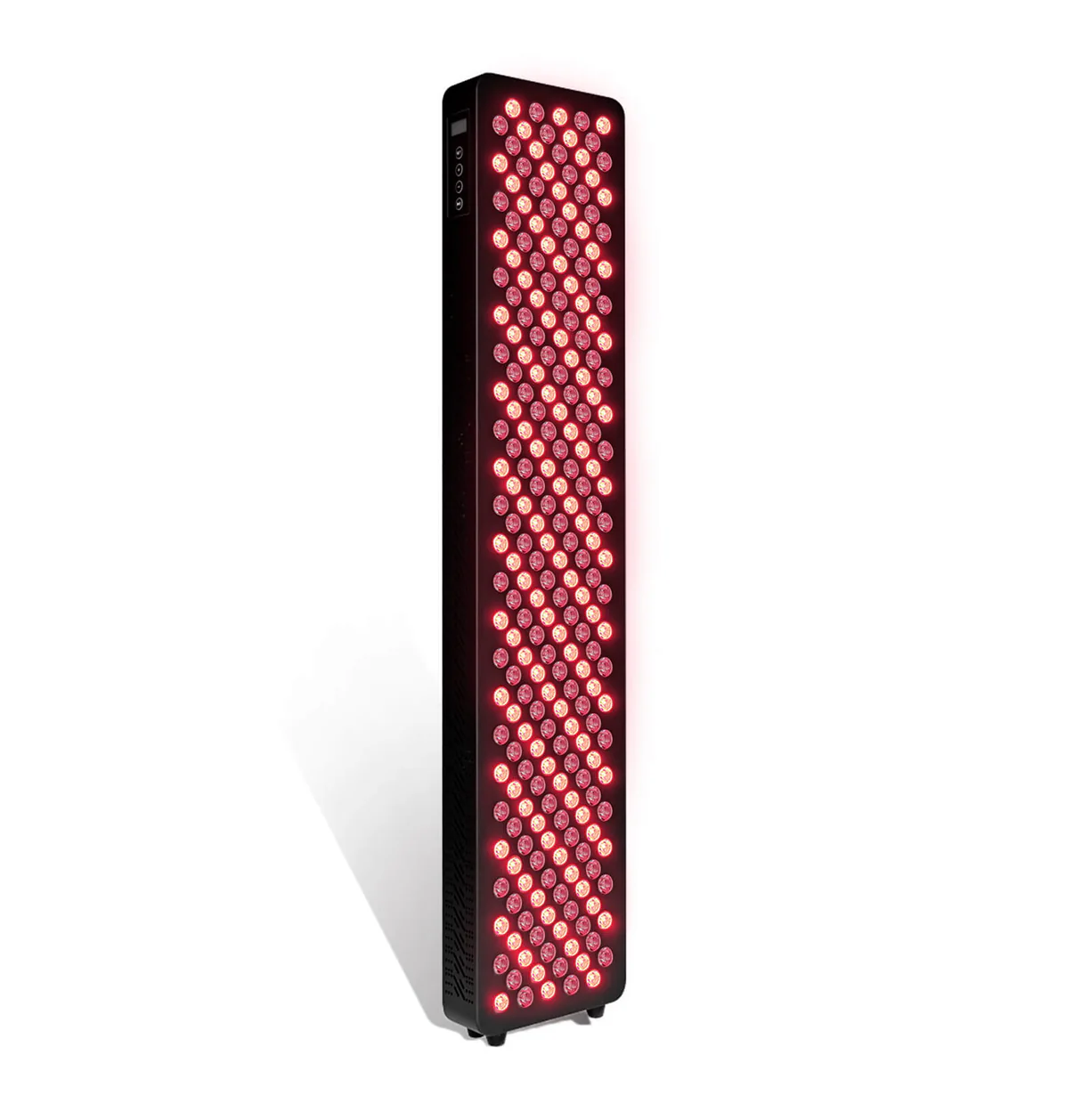
| Full-body panel | Systemic benefits, recovery, anti-aging | 660nm + 850nm | Best value per treatment area. Look for irradiance >50 mW/cm² at 6 inches. |
| Face mask / handheld | Skin rejuvenation, acne, targeted wrinkles | 630–660nm ± 850nm | FDA clearance matters here. Many cheap masks lack therapeutic irradiance. |
| Scalp cap / helmet | Hair regrowth, androgenetic alopecia | 650–670nm | FDA-cleared options exist (e.g. Capillus, iRestore). Require consistent use for months. |
| Targeted wearable | Joint pain, knee/back/shoulder injury | 660nm + 850nm | Good for localized treatment without a full panel. Look for flexible form factor. |
| Clinical in-office | Wound healing, dermatology, neuropathy | Varies by condition | Highest irradiance and precision. Covered by some provincial health plans for specific conditions. |
What to Look For When BuyingThe two things that matter most: wavelength accuracy (must be in the 630–680nm red or 800–850nm NIR range) and irradiance (power output at your skin; therapeutic range is 20–200 mW/cm²). Many cheap consumer devices don’t disclose irradiance. Ask for third-party test results or avoid. FDA clearance is a meaningful signal — it means safety data was reviewed, not just marketing.
How to Use It
Protocol Guide: Getting Started
Optimal results require consistent protocols using devices with proper wavelengths (660nm red, 850nm near-infrared), combined with supportive lifestyle factors including exercise, quality sleep, and anti-inflammatory nutrition.
| Variable | Recommendation | Why It Matters |
|---|---|---|
| Session length | 10–20 minutes per area | Longer isn’t always better — excessive exposure can inhibit (biphasic dose response) |
| Frequency | 3–5 sessions/week | Consistency matters more than intensity. Daily use is acceptable for most devices. |
| Distance from device | 6–12 inches | Closer increases irradiance; too close on sensitive skin can cause mild warmth |
| Skin prep | Clean, dry, no sunscreen | Sunscreen and some topicals can block or absorb light before it reaches tissue |
| Eye protection | Wear goggles or close eyes | Red light panels are bright — chronic unprotected eye exposure may cause strain |
| Timeframe for results | 4–12 weeks (condition-dependent) | Skin changes: 4–8 weeks. Hair regrowth: 3–6 months. Pain relief: often within weeks. |
Who Should Consult a Doctor FirstAvoid or seek medical advice before using RLT if you: are pregnant; have a history of photosensitivity or are taking photosensitizing medications (certain antibiotics, retinoids); have active skin cancer or a history of melanoma; have thyroid conditions (don’t use directly on the thyroid); or are undergoing active cancer treatment (evidence is mixed — discuss with your oncologist).
Safety Profile
Side Effects & Safety
Red light therapy has a well-established safety profile when used correctly. The 2025 multi-specialist consensus review concluded that the therapy is safe and effective for several clinical applications.
Unlike UV light, which can cause DNA damage and increase skin cancer risk, red and near-infrared wavelengths are non-ionizing. They do not burn, penetrate chromosomal material, or cause the cumulative photodamage associated with sun exposure.
Possible Minor Side Effects
Some users report temporary redness or mild warmth at the treatment site — this typically resolves within an hour. Eye strain can occur with direct, unprotected exposure to bright panels. Very rarely, people with pre-existing photosensitivity conditions may experience a reaction.
The Cost Reality
Red light therapy typically isn’t a covered treatment. You’ll likely need ongoing treatments — one to three times per week for weeks or even months — which may add up to considerable out-of-pocket costs. A quality home panel ($300–$800 CAD) can provide better long-term value than repeated clinic visits for many applications.
Common Questions
Frequently Asked Questions
No — they’re different therapies. Infrared saunas primarily work through heat, raising core body temperature. Red light therapy uses specific wavelengths at non-thermal intensities to drive cellular changes at the mitochondrial level. They can complement each other, but the mechanisms are distinct.
It depends on the application. Pain and inflammation relief can occur within days to a few weeks. Skin rejuvenation typically shows measurable change at 4–8 weeks of consistent use. Hair regrowth is the slowest — most studies show meaningful results at 3–6 months of regular treatment.
Yes, daily use is generally safe for most people. However, photobiomodulation follows a “biphasic dose response” — meaning there’s an optimal therapeutic range, and excessive exposure can inhibit rather than enhance results. Stick to 10–20 minutes per area per session.
No. Clothing significantly blocks red and near-infrared wavelengths before they can reach the skin. Direct skin contact or thin, light-coloured clothing minimizes this issue, but for therapeutic use, treating bare skin is standard practice.
Almost certainly not. The critical variable is irradiance — the amount of energy actually reaching your tissue. Budget devices frequently lack the power output to achieve therapeutic doses. Look for devices that publish third-party irradiance testing, and check for FDA clearance on face-specific devices.
There’s no scientific evidence to support red light therapy for weight loss, despite widespread marketing claims. A December 2024 trial did show localized fat reduction in the abdominal area with twice-weekly PBM treatment, but this is distinct from systemic weight loss and should not be the primary reason someone invests in a device.
The Bottom Line
Our Honest Assessment
Red light therapy is not a miracle cure — but it’s also not just wellness hype. The cellular mechanism is real, the safety profile is excellent, and over the past decade the evidence has solidified in several clinical niches. The 2025 consensus review gives it the strongest scientific validation to date for specific conditions.
Where it genuinely excels: skin health, hair regrowth, wound healing, inflammation, pain management, and muscle recovery. Where the evidence is thin: weight loss, depression, cancer, and most of the viral TikTok claims. Social media claims often amplify its benefits beyond available evidence — so calibrate accordingly.
For most people, a quality home panel used 3–5 times weekly over 8–12 weeks is the lowest-risk, highest-value way to find out whether RLT works for your specific goals. If you’re dealing with a specific medical condition, speak with a healthcare provider before starting.
Want More Evidence-Based Health Guides?
ProHealthLink covers emerging therapies, performance tools, and wellness trends through the lens of actual science — no hype, no sponsorships.