Table of Contents
Ivermectin & Fenbendazole for Cancer: What the Science Actually Shows in 2026
Two antiparasitic drugs have gone viral as cancer treatments. Here’s where the claims came from, what the real evidence says, the known risks — and the protocols cancer patients are actually using.
Ivermectin
Fenbendazole
Drug Repurposing
Evidence-Based
Table of Contents
Where These Claims Came From
In 2016, an Oklahoma man named Joe Tippens was diagnosed with small cell lung cancer that had spread throughout his body — neck, stomach, liver, bladder, pancreas, and bones. He was given roughly three months to live. After hearing a story from a veterinarian friend about a dog dewormer called fenbendazole, he added it to a stack that included curcumin, CBD oil, and vitamin E.
Within months, his scans came back clean. He shared the story on his blog, My Cancer Story Rocks, and it went worldwide — sparking a phenomenon so large that fenbendazole sold out at pharmacies across South Korea in 2019.
Joe Tippens was simultaneously enrolled in a clinical trial at MD Anderson Cancer Center testing Keytruda (pembrolizumab) — a PD-1 checkpoint immunotherapy drug known to produce complete responses in a subset of patients. His remission almost certainly involved both. It is impossible to attribute his outcome to fenbendazole alone, and his oncology team at MD Anderson has not credited the dewormer.
Ivermectin entered the cancer conversation somewhat separately, accelerated by its COVID-19 controversy and renewed public interest in repurposed drugs. Mel Gibson claimed on Joe Rogan’s podcast in January 2025 that ivermectin helped cure three friends with stage 4 cancer — an episode that has since been viewed over 12 million times. By early 2026, the National Cancer Institute (NCI) confirmed it had begun studying ivermectin’s ability to kill cancer cells in preclinical models.
What These Drugs Actually Are
Fenbendazole
Fenbendazole is a benzimidazole antiparasitic approved for veterinary use — sold under brand names like Panacur C and Safe-Guard. It has been used to deworm dogs, cats, and livestock since the 1970s. It is not approved by the FDA or EMA for use in humans. Its chemical cousins mebendazole and albendazole are approved for human parasitic infections and are structurally similar.
Ivermectin
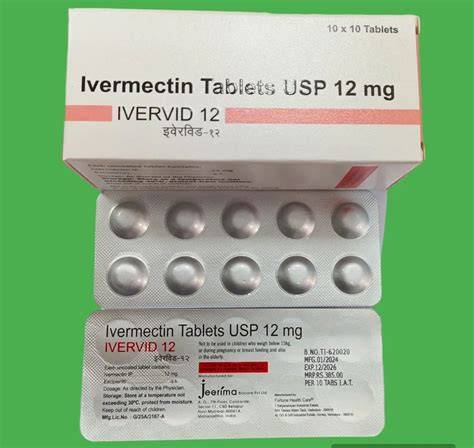
Ivermectin is FDA-approved for specific human uses — including treatment of river blindness (onchocerciasis), strongyloidiasis, and scabies. It has an excellent decades-long safety record at approved doses. What’s being explored for cancer is a different application entirely, often at higher doses, which is a separate risk profile from its approved uses.
What the Science Shows
The Preclinical Data (Lab & Animal Studies)
This is where things get genuinely interesting — and also where most of the misinformation starts. Both drugs have shown real anti-cancer activity in laboratory settings:
Fenbendazole’s proposed mechanisms:
- Disrupts microtubule polymerization in cancer cells — the same basic mechanism as taxane chemotherapy drugs
- Inhibits glucose uptake via GLUT transporter downregulation, starving cancer cells of fuel
- Stabilizes p53, a key tumor suppressor gene that many cancers deactivate
- Induces apoptosis (programmed cell death) in multiple cancer cell lines in vitro
Ivermectin’s proposed mechanisms:
- Blocks the Wnt/β-catenin and Akt/mTOR signaling pathways that support cancer cell survival
- May enhance immune checkpoint inhibitor (immunotherapy) activity by reducing tumor immune evasion
- Preclinical models suggest it promotes cancer cell death across several cancer types
“Many, many things work in a test tube. Quite a few things work in a mouse or a monkey. It still doesn’t mean it’s going to work in people.” — Jeffery Edenfield, Executive Medical Director, Prisma Health Cancer Institute. This is the fundamental challenge with both drugs. Preclinical results are promising enough to warrant investigation — but they are not clinical proof.
Human Clinical Evidence (2026 Status)
This is where the story gets more sobering.
Ivermectin: A Phase I/II clinical trial (NCT05318469) at Cedars-Sinai evaluated ivermectin combined with immunotherapy in metastatic triple-negative breast cancer — one of the most aggressive subtypes. Preliminary data found no significant benefit from adding ivermectin to the immunotherapy regimen. That trial is expected to complete in 2026, but has not yet advanced through Phase 3. No large-scale randomized controlled trials exist. The NCI confirmed in early 2026 it is conducting preclinical work, but has not cited new human data that prompted the inquiry.
Fenbendazole: There are no completed controlled human clinical trials. A June 2026 observational cohort study published in Anticancer Research tracked real-world self-reported outcomes of cancer patients using ivermectin and mebendazole (a fenbendazole cousin), but observational self-reported data carries significant bias and is not the same as a randomized controlled trial. The FDA and EMA have not approved fenbendazole for human use at any dose or indication.
✅ What’s Legitimate
- Real preclinical anti-cancer mechanisms identified
- Enough lab-level signal to justify formal clinical trials
- Both drugs are inexpensive and widely accessible
- Ongoing institutional research (NCI, Cedars-Sinai)
- Mebendazole has slightly more human trial data than fenbendazole
⚠️ What’s Not Proven
- No large RCTs showing efficacy in humans
- Ivermectin breast cancer trial showed no benefit
- Joe Tippens was on concurrent immunotherapy — causation unclear
- Survivorship bias dominates online testimonials
- Fenbendazole absorption in humans is poor and variable
Real Risks and Safety Concerns
Fenbendazole: Liver Toxicity is the Main Risk
Multiple published case reports document drug-induced liver injury (DILI) in cancer patients self-administering fenbendazole:
- An 80-year-old woman with non-small cell lung cancer on pembrolizumab developed severe liver injury after one month of self-administered fenbendazole. No tumor shrinkage was observed. Liver function normalized after she stopped.
- A 47-year-old woman with metastatic colon cancer on nivolumab/relatlimab developed severe hepatocellular liver injury after escalating her fenbendazole dose.
- A 68-year-old man with hepatocellular carcinoma and pre-existing liver disease (cirrhosis) developed cholestatic liver injury. Patients with existing liver disease are at dramatically elevated risk.
- Early animal research found fenbendazole actually promoted liver tumor growth in rats and has been used as a liver tumor promoter in some animal studies — a concerning finding that is rarely mentioned in online communities.
The American Cancer Society has explicitly stated: “In the case of fenbendazole, there is no proven benefit but several potential risks.”
Both drugs can interfere with standard cancer treatments, particularly immune checkpoint inhibitors (Keytruda, Opdivo, Yervoy and others). Taking either drug without disclosing it to your oncology team makes it nearly impossible for them to manage your care safely, distinguish drug toxicity from treatment side effects, or interpret your labs accurately. Always disclose.
Ivermectin: Risks at Off-Label Doses
Ivermectin at standard approved doses is generally well-tolerated. At the higher doses being explored for cancer — which are significantly above what’s approved for parasitic treatment — the risk profile is not well-characterized. Potential concerns include neurological effects (dizziness, confusion), GI upset, and unknown interactions with immunotherapy agents.
The Delay Problem
The biggest documented risk with both drugs is not direct toxicity — it’s that cancer patients use them as a substitute for conventional treatment rather than in addition to it. For early-stage or potentially curable cancers, delayed or foregone standard treatment can mean the difference between cure and progression to advanced disease. This risk is most acute for people who discover these protocols in the early days of a diagnosis, when emotions run high and standard oncology timelines feel slow.
Dosing Protocols in Use (2026)
The protocols below are documented here for educational and harm-reduction purposes only. They represent what online communities and integrative practitioners are doing — not clinical recommendations. Neither fenbendazole nor ivermectin is approved for cancer treatment. Dosages have not been validated by controlled human trials. Do not start, stop, or modify any cancer treatment without consulting your oncologist. Always disclose any supplements or off-label drugs to your care team.
The Joe Tippens / Fenbendazole Protocol (Original)
The most widely circulated fenbendazole protocol, based on Joe Tippens’ personal regimen as shared on his blog and social media. Tippens himself has warned that scam accounts are actively exploiting cancer patients using his name — the only legitimate group associated with him is the Facebook group mycancerstory.rocks.
| Component | Dose | Schedule | Notes |
|---|---|---|---|
| Fenbendazole | 222 mg | 3 days on / 4 days off | Take with a fat-containing meal to improve absorption. 1g of Panacur C granules (22.2% concentration) = 222 mg fenbendazole. Pure 222 mg capsules now widely available. |
| Vitamin E (Tocotrienols) | 800 IU | Daily | Tocotrienol form preferred over common tocopherol. Taken on the same days as fenbendazole. |
| Curcumin | 600 mg | Daily | Bioavailability-enhanced formulations (e.g. with piperine or as a liposomal form) recommended. Standard curcumin has poor absorption. |
| CBD Oil | 25 mg | Daily | Full-spectrum or broad-spectrum. Note: CBD can interact with several chemotherapy drugs via CYP450 enzyme competition — disclose to your oncologist. |
Modified / Community-Evolved Protocols
Various online communities have evolved Tippens’ original protocol. Common modifications include:
| Variation | Detail | Rationale Cited |
|---|---|---|
| Continuous daily dosing | 222 mg fenbendazole every day, no rest days | Some practitioners argue continuous exposure is more effective; rest days were originally included to reduce liver stress |
| 6 on / 1 off | Fenbendazole 6 days per week, 1 day off | Compromise between continuous dosing and original protocol |
| Higher-dose protocols | 444–666 mg per dose (2–3x standard) | Online communities report escalating doses when no response is seen at 222 mg; significantly increases liver risk |
| Adding berberine | 500–1,000 mg daily | Proposed synergy with fenbendazole’s glucose metabolism disruption; also has independent anti-cancer preclinical evidence |
Ivermectin Cancer Protocol
Ivermectin dosing for cancer is far less standardized than fenbendazole. Online integrative oncology communities reference the following range, derived from the Cedars-Sinai trial and various practitioner reports:
| Parameter | Detail |
|---|---|
| Typical dose range | 0.2 – 0.6 mg/kg body weight per day (approved antiparasitic dose is 0.2 mg/kg; cancer protocols trend toward the higher end) |
| Schedule | Daily or pulsed (3–5 days on, 2–4 days off). No consensus exists. |
| With food | Take with a high-fat meal — significantly improves bioavailability (similar to fenbendazole) |
| Common add-ons | Some protocols combine ivermectin with mebendazole (not fenbendazole) as a “dual benzimidazole” approach — notably advocated in a 2024 paper co-authored by Dr. Paul Marik |
| Monitoring | Regular liver function tests (AST/ALT) and CBC recommended; anyone on immunotherapy should have oncologist awareness |
Veterinary fenbendazole (Panacur C) is widely available at farm supply stores and online. Pharmaceutical-grade human ivermectin requires a prescription in Canada — veterinary ivermectin formulations vary significantly in concentration and carry serious dosing risks if used by humans. Compounded ivermectin capsules from licensed compounding pharmacies represent the safest approach if a physician is prescribing off-label.
Bottom Line
Ivermectin and fenbendazole are not proven cancer treatments. They are also not snake oil — there is enough genuine preclinical signal that mainstream institutions, including the NCI and Cedars-Sinai, have put research resources behind them. That matters.
What that means practically:
- If you or someone you know is considering these drugs as a complement to conventional oncology care — discuss it openly with your oncologist. Many integrative oncologists are willing to monitor and supervise off-label use with appropriate lab work.
- If you’re considering them as a replacement for proven treatment — the evidence does not support that, and the delay risk is real and serious.
- The liver is the primary organ at risk with fenbendazole; get baseline liver function tests before starting and monitor regularly.
- Online communities carry significant survivorship bias — the people who post success stories are not a representative sample of everyone who tried these protocols.
- The research landscape is moving fast. Clinical trial data expected in 2026–2027 will be the first meaningful human evidence. Watch this space.
This article is for informational and educational purposes only and does not constitute medical advice, diagnosis, or treatment recommendations. Ivermectin and fenbendazole are not approved by Health Canada, the FDA, or the EMA for cancer treatment. Always consult a licensed physician or oncologist before starting, stopping, or modifying any treatment. ProHealthLink does not endorse the off-label use of any medication.